
Losing a parent brings emotional strain, and paperwork often adds to it. Filing their final income tax return is one such task. Fortunately, the process follows clear steps, and a legal heir can complete it smoothly.
Who Can File the Return
Under Section 159 of the Income-tax Act, a legal representative must complete pending returns. This usually means the spouse, a child, or another rightful heir. Importantly, a nominee alone cannot file the return unless recognized as a legal heir too. If a will exists, the executor typically manages this responsibility instead.
Step 1: Obtain the Legal Heir Certificate
Before anything else, you need proof of your legal heir status. This certificate comes from the tehsildar or municipal office in your parent’s area. Alongside it, keep the death certificate and your parent’s PAN details ready. These documents form the foundation for everything that follows.
Step 2: Register as a Representative Assessee
Next, log in to your own account on the e-filing portal. From there, raise a request to register as your parent’s representative. You’ll need to upload the deceased’s PAN, the death certificate, and legal heir proof. Additionally, provide your own validated bank account details during this step.
Once submitted, the income tax department reviews your request. After approval, you gain permission to file returns on your parent’s behalf. The registration itself also serves as an official notification, so no separate letter is required.
Step 3: File the Final Return
With registration approved, you can now file the ITR under your parent’s PAN. Income earned from April 1 until the date of death belongs in this return. Meanwhile, income earned by inherited assets afterward goes into your own return instead. This distinction matters, since the two amounts are taxed differently.
While filing, mention the assessee’s name using “Late Mr.” or “Late Ms.” accordingly. Enter your own details as the representative filing the return. Then, claim eligible deductions, TDS credit, advance tax, and any self-assessment tax paid. This ensures the return reflects the deceased’s true tax position accurately.
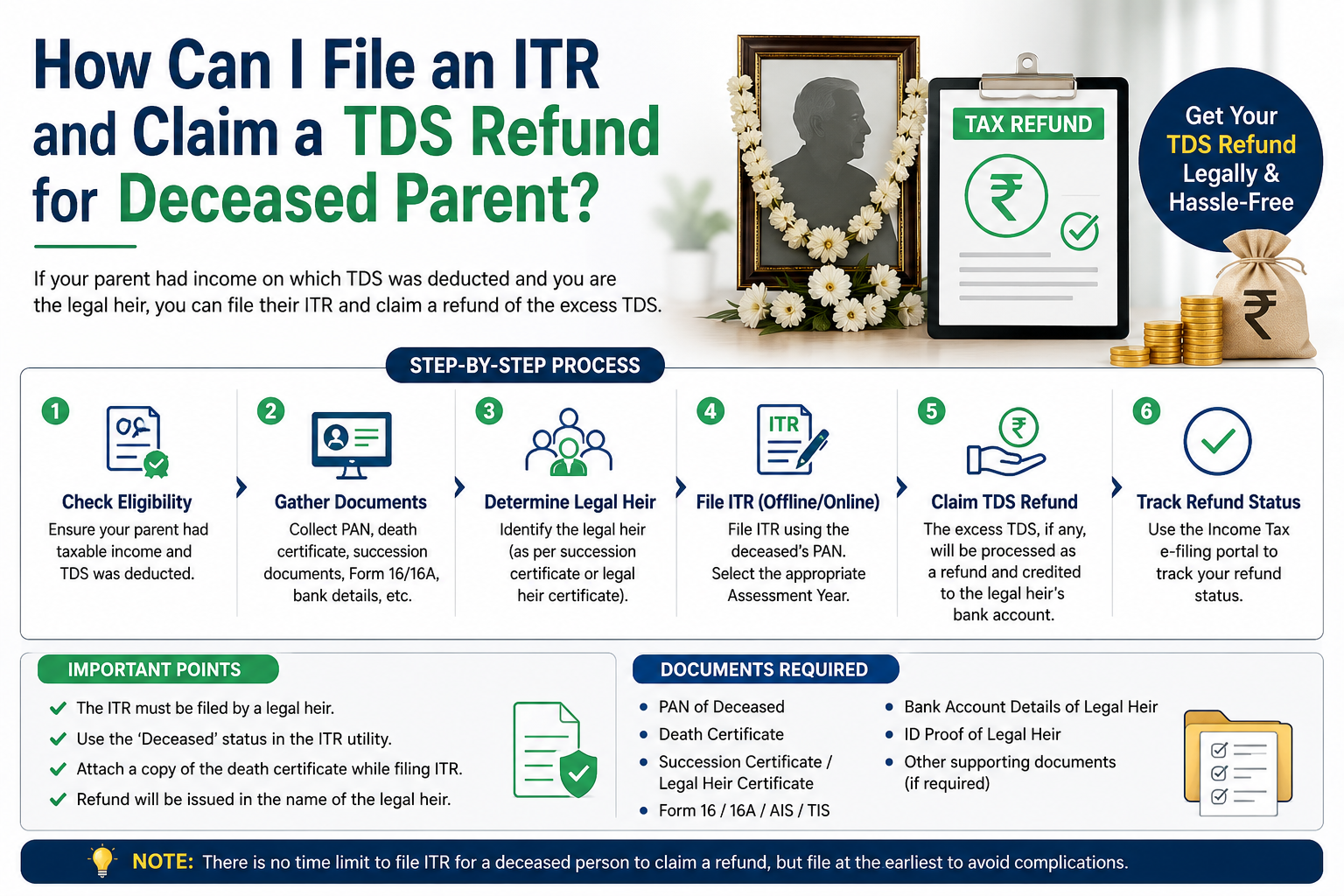
Step 4: Claim the TDS Refund
If excess tax was deducted at source, you can claim it as a refund. The refund gets processed once the department verifies your filed return. Consequently, it gets credited to the bank account you provided during registration.
Sometimes, the deceased’s original bank account gets closed before the refund arrives. However, this doesn’t mean the refund is lost forever. Instead, raise a “Refund Reissue” request through the portal afterward. Simply log in as the legal heir, then navigate to Services and select Refund Reissue. Provide your own validated bank account, and the refund gets redirected there.
Handling Two Returns in the Year of Death
The year someone passes away often requires filing two separate returns. First, the deceased’s final return covers income up to the date of death. Second, your own return covers income from inherited assets afterward. For example, interest earned on inherited fixed deposits belongs in your return, not theirs.
This split ensures each income stream gets taxed in the right hands. Therefore, keeping clear records of dates and amounts becomes essential. Doing so prevents confusion and errors during assessment.
Common Delays and How to Avoid Them
Refunds sometimes take longer than expected due to documentation issues. Rejected legal heir proof or an unvalidated bank account often causes delays. In some cases, refunds get stuck when the portal tries crediting a frozen account. To avoid this, validate your bank account thoroughly before submitting any request.
Also, ensure your PAN is properly linked with your Aadhaar. This linkage is mandatory for the refund reissue process to work. Without it, even a fully approved request may face unnecessary holdups.
Liability of the Legal Heir
As the legal representative, you become liable for the deceased’s tax dues. However, this liability is limited to the value of assets you inherited. In other words, you won’t personally bear costs beyond what you received. This protection exists specifically under Section 159 of the Act.
Final Thoughts
Filing a deceased parent’s return may feel overwhelming during a difficult time. Nevertheless, the process remains structured and manageable with the right documents. Registering as a legal heir, filing accurately, and tracking refunds carefully makes all the difference. When in doubt, consulting a tax professional can help avoid costly mistakes.
Recent Comments