
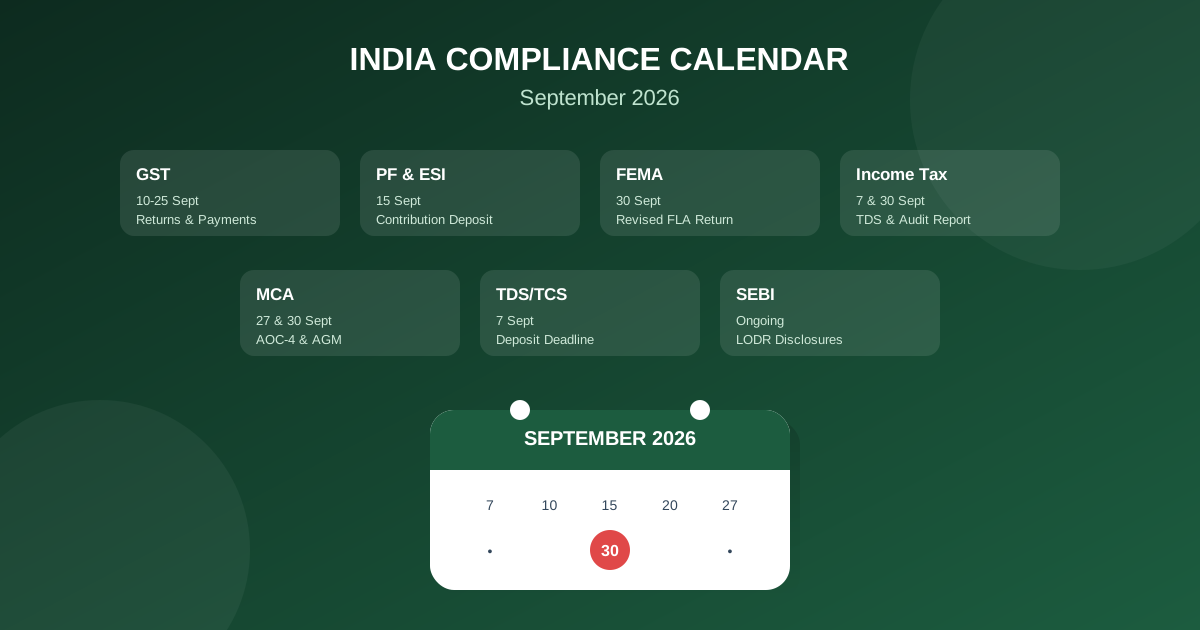
September brings a heavy compliance load for Indian businesses. Multiple laws demand attention within the same month. Therefore, tracking every deadline becomes essential for smooth operations.
This calendar covers GST, PF, ESI, FEMA, Income Tax, MCA, TDS/TCS, and SEBI requirements. Consequently, you get one clear reference instead of scattered notices.
GST Deadlines for September 2026
GST compliance carries several dates this month. First, GSTR-7 and GSTR-8 fall due on 10 September. These forms cover TDS and TCS reporting under GST, respectively.
Next, monthly taxpayers must file GSTR-1 by 11 September. Meanwhile, QRMP taxpayers can use the Invoice Furnishing Facility until 13 September. GSTR-5 and GSTR-6 share this same 13 September deadline.
GSTR-3B and GSTR-5A follow on 20 September for monthly filers. Additionally, non-resident service providers must meet this date too. Finally, QRMP taxpayers pay tax through PMT-06 by 25 September.
- 10 Sept: GSTR-7 (TDS) and GSTR-8 (TCS)
- 11 Sept: GSTR-1 for monthly filers
- 13 Sept: GSTR-5, GSTR-6, and IFF for QRMP
- 20 Sept: GSTR-3B and GSTR-5A
- 25 Sept: PMT-06 payment for QRMP taxpayers
Since CBIC frequently revises these dates, always verify the portal before filing. This small habit prevents unnecessary late fees.
ESI and PF Deadlines for September 2026
Payroll compliance stays simple but strict. Both PF and ESI contributions for August are due by 15 September. This deadline applies through the EPFO and ESIC portals, respectively.
The Electronic Challan-cum-Return handles PF filing and payment together. Similarly, employers upload ESI details before making the contribution. There is no grace period for either payment.
Late deposits attract interest immediately. Specifically, PF late payment draws 12% annual interest plus escalating damages. ESI works the same way, charging 12% simple interest from the 16th onward.
Therefore, employers should reconcile payroll data early. This way, contribution amounts stay accurate before the deadline arrives.
FEMA Deadlines for September 2026
Foreign exchange compliance also demands attention this month. Companies with foreign investment must revisit their FLA Return. If audited figures were unavailable earlier, a revised return is due by 30 September.
This filing happens through the RBI’s FLAIR portal. Moreover, no separate RBI approval is required for this revision. However, missing it counts as a FEMA contravention.
Additionally, cross-border guarantee reporting follows a quarterly cycle. Form GRN-FORMAT typically reaches the authorised bank within fifteen days of quarter-end. Businesses handling foreign loans should track this alongside the FLA update.
Income Tax Deadlines for September 2026
Direct tax obligations peak during September. TDS and TCS deducted in August must reach the government by 7 September. This deadline applies uniformly across deductors and collectors.
The second instalment of advance tax for Tax Year 2026-27 also falls in mid-September. Taxpayers should calculate this based on projected annual income. Under the Income Tax Act 2025, some forms and provisions have changed.
Businesses requiring a tax audit face their biggest September deadline. The tax audit report for FY 2025-26 is due by 30 September. This deadline applies to accounts requiring statutory audit under the Act.
- 7 Sept: TDS/TCS deposit for August 2026
- Mid-September: Second advance tax instalment for TY 2026-27
- 30 Sept: Tax audit report deadline for FY 2025-26
Since the new Income Tax Act 2025 now governs TY 2026-27, double-check applicable forms. Relying on old form numbers could create filing errors.
Companies Act and MCA Deadlines for September 2026
Corporate compliance reaches a peak point this month. Companies must hold their Annual General Meeting by 30 September. This deadline applies where the financial year ended on 31 March.
One Person Companies face an earlier date for financial statements. AOC-4 filing for OPCs is due by 27 September. Other companies get additional time after their AGM concludes.
Meanwhile, MSME-1 reporting for the April-September period runs until 31 October. Although this deadline falls next month, preparation should start now. Outstanding MSME payments need accurate documentation beforehand.
Directors should also verify their DIN status on the MCA V3 portal. A disqualified or inactive DIN can delay other filings unexpectedly.
TDS and TCS Deadlines for September 2026
TDS and TCS obligations overlap with income tax requirements this month. The core deadline remains 7 September for August’s deducted amounts. This covers salary, contractor, and rental TDS payments alike.
Businesses must also verify certificate and return requirements under the new tax framework. Since the Income Tax Act 2025 restructured several provisions, forms may differ from earlier years. Consequently, deductors should confirm current formats before submission.
Timely TDS deposit also protects against disallowance under income tax provisions. Late payment can permanently disallow certain expense claims. Therefore, treat this deadline as non-negotiable.
SEBI Deadlines for September 2026
Listed companies carry ongoing SEBI obligations throughout September. Quarterly financial results must reach stock exchanges within forty-five days of quarter-end. This requirement continues regardless of other filings.
Demat-related certificates also follow strict monthly timelines. A dematerialisation certificate is due within fifteen days of each quarter’s end. Meanwhile, the share capital reconciliation audit report allows thirty days.
Since many companies hold their AGM by 30 September, related SEBI disclosures gain importance too. The Annual Report must reach shareholders at least twenty-one days before the AGM. Consequently, companies should finalise this document well in advance.
Governance teams should track material event disclosures throughout the month as well. SEBI requires these disclosures within twelve to twenty-four hours of occurrence.
Why This Calendar Matters
Missing any single deadline can trigger penalties across multiple laws. GST delays bring interest and late fees. Similarly, MCA non-compliance risks director disqualification.
Furthermore, FEMA violations can freeze future remittances entirely. This affects funding rounds and cross-border transactions directly. Therefore, proactive planning protects both compliance and business continuity.
Final Thoughts
September 2026 demands coordinated attention across seven regulatory areas. However, breaking deadlines into categories makes the month manageable. Use this calendar as your working checklist throughout September.
In summary, mark each date on your compliance tracker today. Early preparation always beats last-minute scrambling near any deadline.
Recent Comments