
Avoid Mistakes Save Tax Stay Compliant
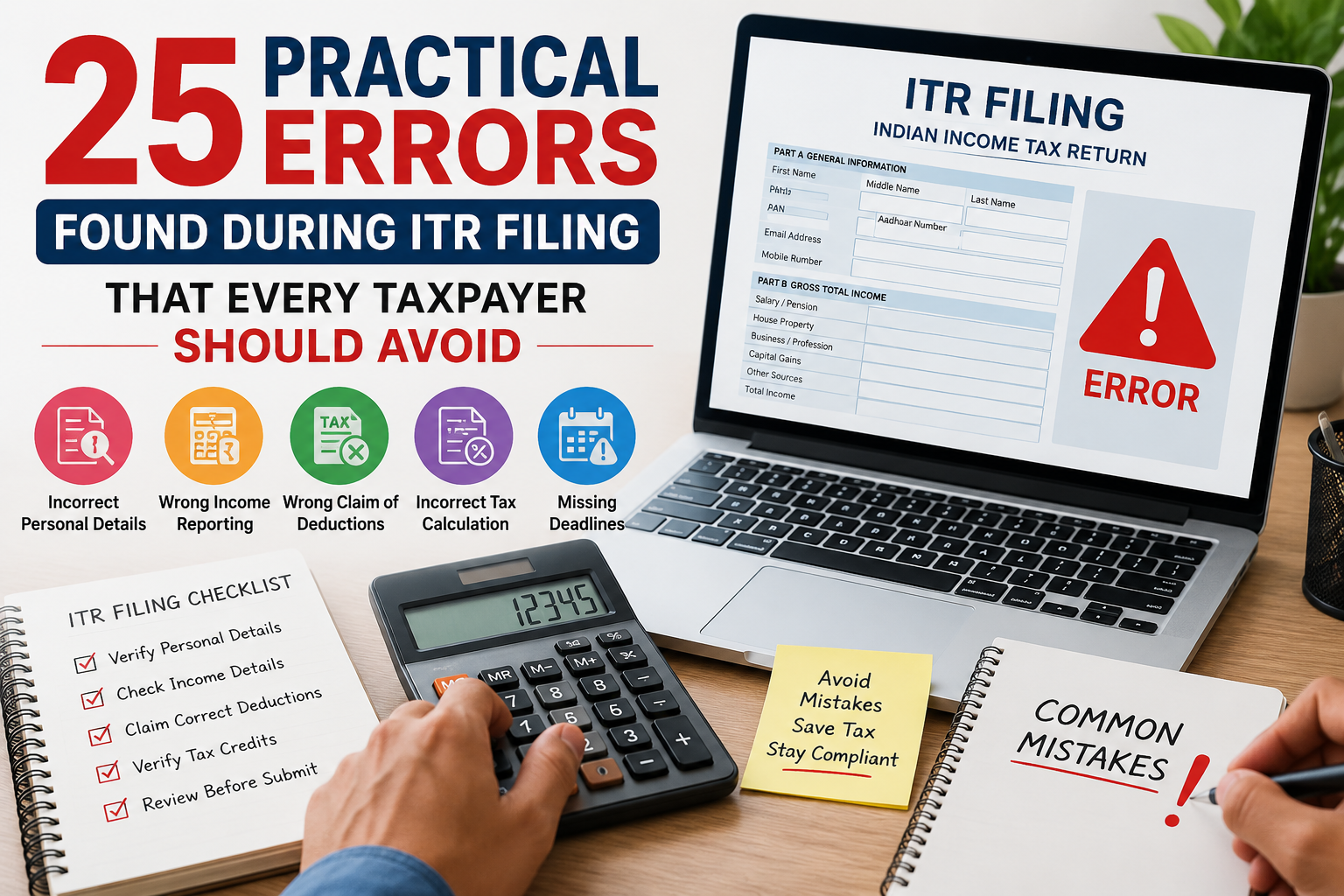
Filing income tax returns can feel overwhelming, especially with changing rules every year. However, most mistakes taxpayers make are avoidable with careful attention. This article highlights 25 common errors and explains how to steer clear of them.
1. Choosing the Wrong ITR Form
Many taxpayers select an incorrect ITR form based on their income type. As a result, the return may get rejected or marked defective. Always verify which form applies to your income sources before filing.
2. Missing the Filing Deadline
Procrastination often leads to last-minute rushes and errors. Therefore, mark your calendar early and file well before the due date. Late filing attracts penalties and interest charges.
3. Incorrect Personal Information
Simple typos in your name, PAN, or address can cause processing delays. Consequently, double-check every personal detail before submission. Even minor errors can trigger unnecessary notices.
4. Not Reporting All Income Sources
Some taxpayers forget to declare interest income, rental income, or freelance earnings. This omission can lead to scrutiny later. Hence, gather all income statements before you begin.
5. Ignoring Form 26AS and AIS
Form 26AS and the Annual Information Statement reveal tax credits and reported transactions. Skipping this verification step often results in mismatches. So, always cross-check these documents first.
6. Wrong Bank Account Details
Refunds get delayed when bank account numbers or IFSC codes are entered incorrectly. Additionally, the account must be pre-validated on the income tax portal. Verify these details carefully.
7. Forgetting to Pre-Validate Bank Accounts
Even with correct details, an unvalidated account blocks refund processing. Thus, complete this step early in the filing process. It only takes a few minutes.
8. Selecting the Wrong Assessment Year
Confusing the assessment year with the financial year is a frequent mistake. This error can completely derail your filing. Always confirm you’re filing for the correct year.
9. Not Claiming Eligible Deductions
Taxpayers often overlook deductions under Section 80C, 80D, or 80G. Consequently, they end up paying more tax than necessary. Review all applicable sections before finalizing your return.
10. Claiming Ineligible Deductions
On the other hand, claiming deductions you don’t qualify for invites trouble. Tax authorities may flag such claims during assessment. Therefore, verify eligibility criteria carefully.
11. Overlooking TDS Mismatches
TDS deducted by employers or banks sometimes doesn’t match Form 26AS. This discrepancy can affect your refund calculation. Always reconcile these figures before submission.
12. Skipping Advance Tax Payments
Taxpayers with significant non-salary income often miss advance tax deadlines. Subsequently, interest under Sections 234B and 234C gets applied. Plan your advance tax payments throughout the year.
13. Wrong Residential Status
Determining residential status incorrectly affects how your income gets taxed. Furthermore, NRIs often misreport this status, leading to compliance issues. Understand the rules before declaring your status.
14. Not Reporting Foreign Assets
Resident taxpayers with foreign assets must disclose them in Schedule FA. Failing to do so attracts severe penalties under the Black Money Act. Always report foreign holdings transparently.
15. Mismatched Capital Gains Calculations
Calculating capital gains incorrectly is a common error among investors. Indexation benefits and holding periods are frequently miscalculated. Use accurate cost inflation index figures for precision.
16. Ignoring Clubbing Provisions
Income from assets transferred to a spouse or minor child sometimes needs clubbing. Many taxpayers overlook this provision entirely. Consequently, this leads to underreported income.
17. Not Verifying the Return After Filing
Filing your ITR is incomplete without e-verification. Many people forget this crucial final step. Without verification, your return remains invalid in the eyes of the department.
18. Delayed E-Verification
Even when taxpayers remember to verify, they sometimes miss the 30-day window. As a result, the return is treated as not filed. Verify your return immediately after submission.
19. Incorrect HRA Calculations
House Rent Allowance exemptions require specific calculations based on salary and rent paid. Errors here often inflate or deflate your taxable income incorrectly. Double-check the formula before claiming this exemption.
20. Not Maintaining Proper Documentation
Some taxpayers file returns without keeping supporting documents handy. Subsequently, they struggle to respond to assessment notices. Always maintain receipts, certificates, and statements for at least six years.
21. Wrong Tax Regime Selection
Choosing between the old and new tax regime requires careful comparison. Many taxpayers select a regime without calculating actual tax liability. Therefore, compare both options before deciding.
22. Reporting Exempt Income Incorrectly
Exempt income like agricultural earnings still needs disclosure in the return. Omitting this information can raise red flags. Always report exempt income in the designated schedule.
23. Not Reconciling GST and ITR Data
Business owners often forget that GST returns and ITR figures should align. Mismatches between these filings can trigger scrutiny. Hence, reconcile both before submission.
24. Overlooking Carry Forward of Losses
Taxpayers sometimes fail to carry forward losses from previous years. As a result, they miss out on legitimate tax-saving opportunities. Always check previous year records for unutilized losses.
25. Filing Without Professional Help When Needed
Complex financial situations often require expert guidance. Nevertheless, many taxpayers attempt complicated filings independently and make costly errors. Consider consulting a tax professional for intricate cases.
Final Thoughts
Avoiding these 25 errors can save you time, money, and unnecessary stress. Ultimately, careful preparation and verification make the filing process smoother. Take your time, double-check every detail, and file with confidence.
Disclaimer: This article is for general informational purposes only and does not constitute professional tax, legal, or financial advice. Tax laws and regulations are subject to change and may vary based on individual circumstances. Readers are strongly advised to consult a qualified chartered accountant, tax professional, or the official Income Tax Department website before making any filing decisions or taking action based on this content. The author and publisher accept no liability for any loss or damage arising from reliance on this information.
Recent Comments