
Form 168 Income Tax: What It Means for Form 26AS Users
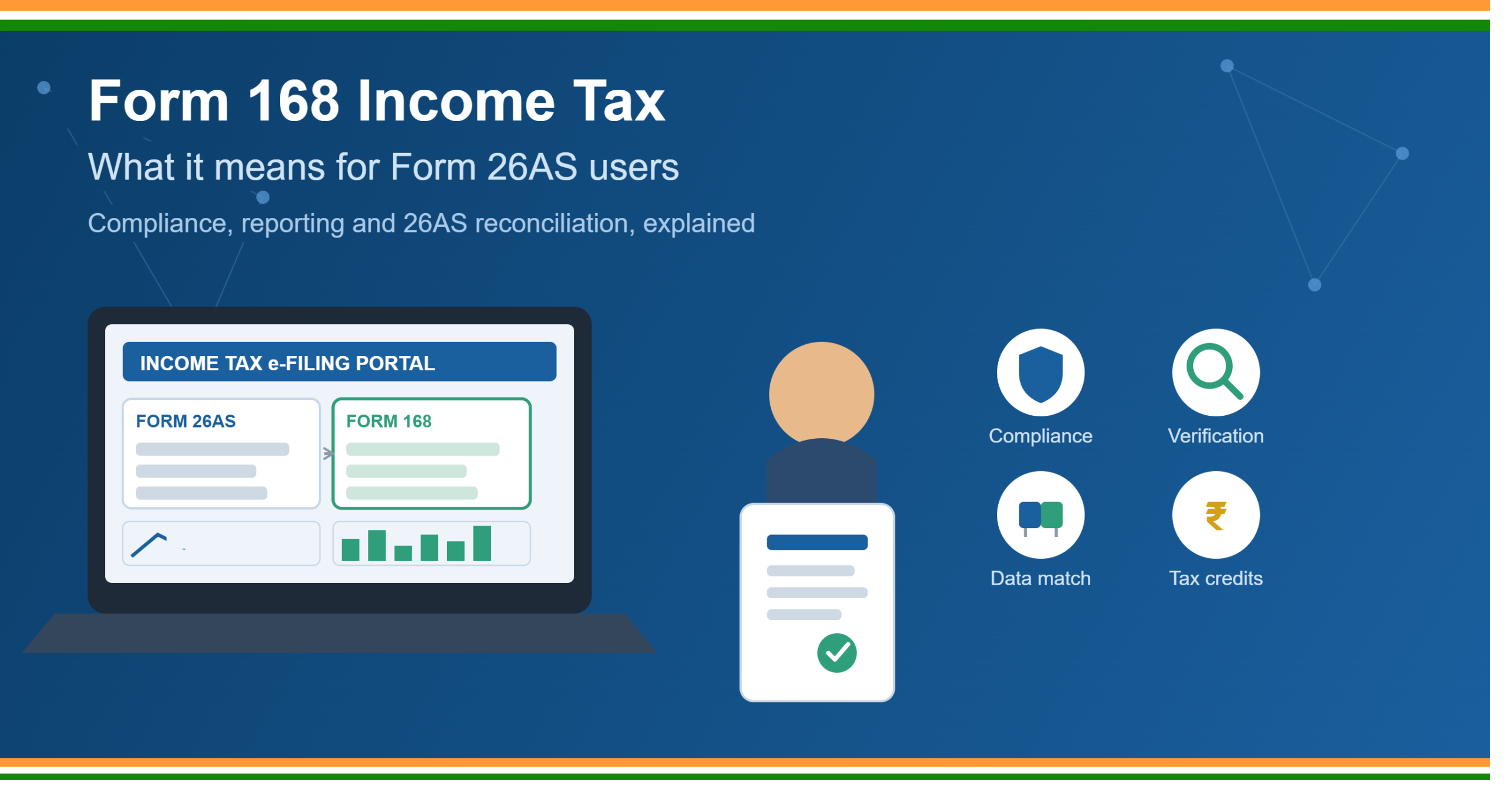
The Income Tax e-Filing portal now shows two familiar-looking documents. One is Form 26AS, governed by the Income-tax Act, 1961. The other is Form 168, introduced under the Income Tax Act, 2025. Many taxpayers feel confused when they see both names. This article breaks down what each form means and how to choose the right one.
Why Two Forms Appear on the Portal
India’s new Income Tax Act, 2025 came into force on April 1, 2026. It replaced the older Income-tax Act, 1961, which had guided direct taxation for more than six decades. As part of this change, several tax forms received new numbers. Form 26AS is one of them. Under the new law, it now carries the label Form 168.
However, the renumbering does not apply everywhere at once. The transition depends on the tax period you are filing for, not simply on today’s date.
Which Form Applies to Your Filing
Here is the key detail every taxpayer should remember. The new Form 168 becomes relevant only from Tax Year 2026-27 onward. That means income earned on or after April 1, 2026 falls under this label. Consequently, taxpayers will encounter Form 168 when they file next year, in Assessment Year 2027-28.
For your current filing this season, nothing changes. If you are filing your return for Assessment Year 2026-27, you are reporting income from Financial Year 2025-26. Therefore, the older forms still apply. You will continue to use Form 26AS, exactly as before. Your Form 16 also remains unchanged for now.
So, ignore any suggestion to download Form 168 before this year’s deadline. That form simply does not apply to the current filing cycle yet.
What Form 26AS (Form 168) Actually Contains
Despite the new number, the content and purpose of this statement stay the same. Think of it as a tax passbook linked to your PAN. It shows tax deducted at source by employers, banks, or clients. It also lists tax collected at source and advance tax payments made during the year.
Salaried employees rely on this statement heavily. Pensioners, too, use it to confirm that banks have deducted and deposited TDS correctly. Meanwhile, freelancers and business owners check it to verify income and tax records before filing.
How to View or Download the Statement
Accessing this document remains straightforward. First, log in to the Income Tax e-filing portal using your PAN or Aadhaar-linked credentials. Next, navigate to “e-File,” then “Income Tax Returns,” and select “View Form 26AS.” The portal then redirects you to the TRACES platform. There, you must accept the usage terms before proceeding. After this, you can view and download the statement in a few clicks.
Alternatively, many banks allow access through net banking, provided your PAN is linked to your account. This option suits taxpayers who prefer a quicker route without a separate portal login.
Steps to Take Before Filing Your Return
Before submitting your income tax return, cross-check every entry carefully. Verify TDS deducted by your employer or pension-disbursing bank. Also confirm interest income reported by fixed deposit institutions. Any mismatch between your records and the portal data deserves prompt attention.
If you spot an error, raise it with the deductor immediately. Corrections made after filing typically take longer to process. For salaried individuals without an audit requirement, the deadline for this year’s return is July 31, 2026.
Looking Ahead to Next Year
Once next year’s filing season arrives, expect the renumbered Form 168 to appear in place of Form 26AS. The underlying statement stays the same; only the label changes. Taxpayers should get comfortable with both names, since portals, banks, and tax professionals will likely use them interchangeably during this transition period.
Final Thoughts
Understanding which form applies to your specific tax period prevents unnecessary confusion. Always check the relevant Act and the correct assessment year before downloading any statement. When in doubt, the portal itself provides guidance on which document matches your filing year. Staying informed today saves considerable time and stress when the next deadline approaches.
Recent Comments