
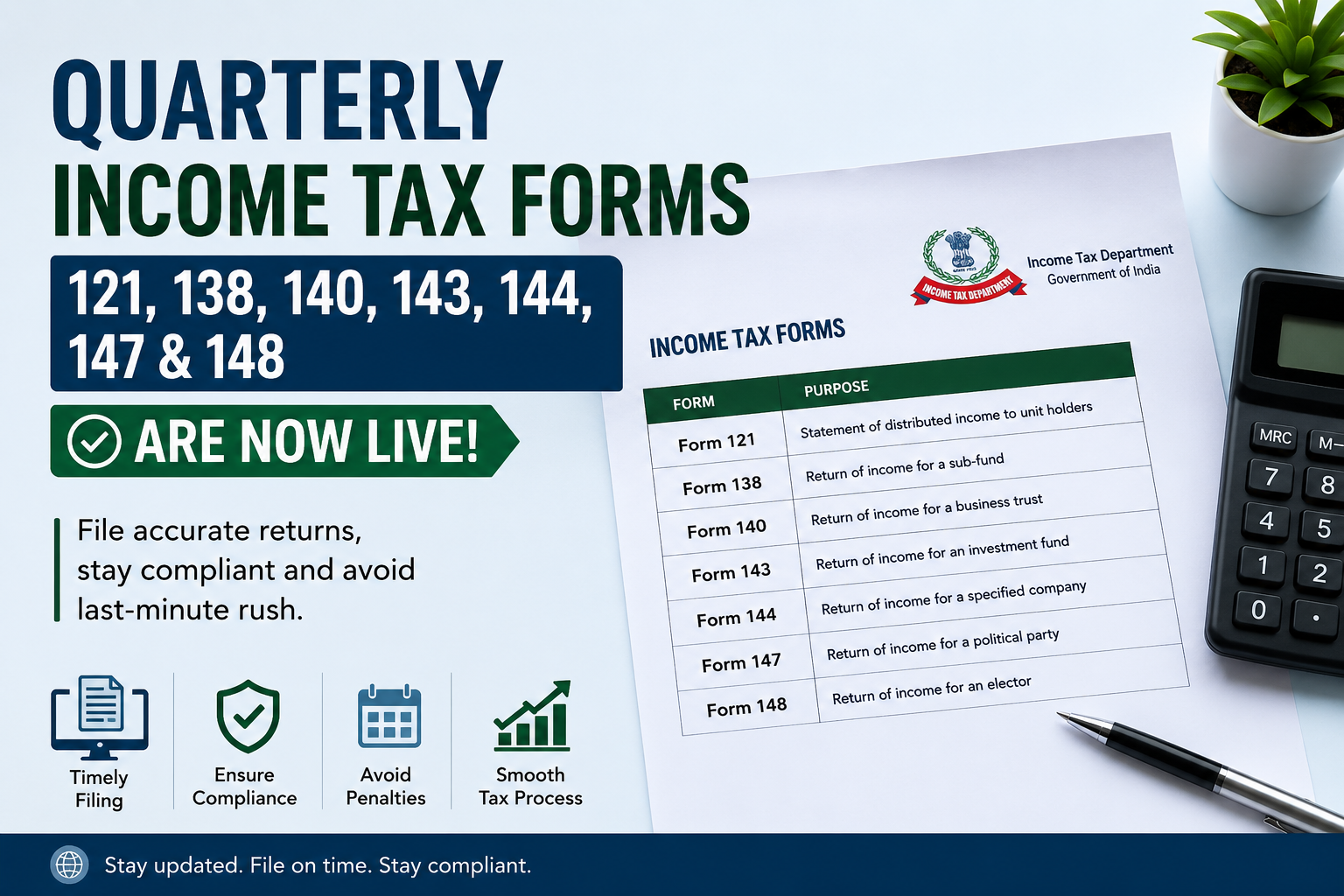
The Income Tax Department has rolled out seven important forms on the e-Filing Portal. Taxpayers, deductors, and banks can now access Forms 121, 138, 140, 143, 144, 147, and 148 online. This update is part of the broader renumbering exercise under the Income-tax Rules, 2026. Consequently, familiar old form numbers have shifted to new ones. Here is a complete breakdown of what changed and why it matters.
Why the Forms Got New Numbers
India’s new Income-tax Act, 2025 replaced the old 1961 law. As a result, the government also introduced fresh rules, effective from April 1, 2026. Under these rules, nearly 400 old forms were consolidated into 190 new ones. Therefore, many familiar forms now carry unfamiliar numbers. However, the underlying compliance requirements largely remain the same. Only the labels have changed, not the substance.
Form 121: The New Declaration Form
Form 121 replaces the older Forms 15G and 15H. Previously, these were separate declarations for senior and non-senior citizens. Now, a single form covers both categories. Taxpayers use it to declare that their income falls below the taxable limit. Banks then avoid deducting TDS on interest payments. This merger simplifies the process for individuals and reduces paperwork significantly.
Forms 138, 140, 143 and 144: TDS and TCS Returns
These four forms cover quarterly TDS and TCS reporting. Specifically, Form 138 replaces the old Form 24Q for salary TDS returns. Similarly, Form 140 takes over from Form 26Q, which covered non-salary TDS. Meanwhile, Form 144 replaces Form 27Q for payments made to non-residents. Finally, Form 143 substitutes the earlier Form 27EQ used for TCS returns.
Businesses filing TDS returns for the first quarter of this tax year must use these new numbers. Otherwise, the portal may reject old form submissions. Additionally, corrections for last year’s filings still require the older form formats. So, professionals need to track which period each filing covers carefully.
Forms 147 and 148: Reporting Foreign Remittances
Form 147 replaces the earlier Form 15CC. Authorised Dealer banks use this form to report foreign remittances every quarter. They must file it within fifteen days after each quarter ends. This creates a cross-check between what businesses report and what banks confirm.
Form 148, on the other hand, replaces the old Form 15CD. Units operating within India’s International Financial Services Centres use this form instead. Rather than filing separate reports for each transaction, these units submit one consolidated quarterly summary. Both forms maintain the same filing frequency as before. Nothing changes regarding deadlines or timing.
What This Means for Taxpayers and Businesses
Overall, this update marks a significant shift in India’s tax compliance landscape. Nevertheless, the core obligations have not become more complex. Instead, the government aims to improve data consistency and enable better analytics. For this reason, businesses should update their payroll and accounting software promptly. Professionals should also train their teams on the new numbering system.
Moreover, taxpayers filing for the FY 2025-26 period still use the old forms for corrections. Meanwhile, all new filings from April 2026 onward must follow the updated numbers. This dual system will run in parallel for some time. Consequently, careful attention to filing periods becomes essential.
Final Thoughts
In summary, the e-Filing Portal now supports these seven renumbered forms. Each form retains its original purpose despite the new label. Therefore, taxpayers should simply adjust to the updated numbers rather than relearn entire processes. Staying informed about these changes helps avoid rejected filings and unnecessary penalties. As always, consulting a tax professional remains a wise step during this transition.
Disclaimer: This article is based on publicly available information about India’s Income-tax Rules, 2026 and the related form renumbering, gathered through web research at the time of writing. Tax rules and portal features can change, and interpretations may vary. This content is for general informational purposes only and does not constitute legal, financial, or tax advice. Readers should verify current requirements on the official Income Tax e-Filing Portal (incometax.gov.in) and consult a qualified tax professional or chartered accountant before making any filing decisions.
Recent Comments